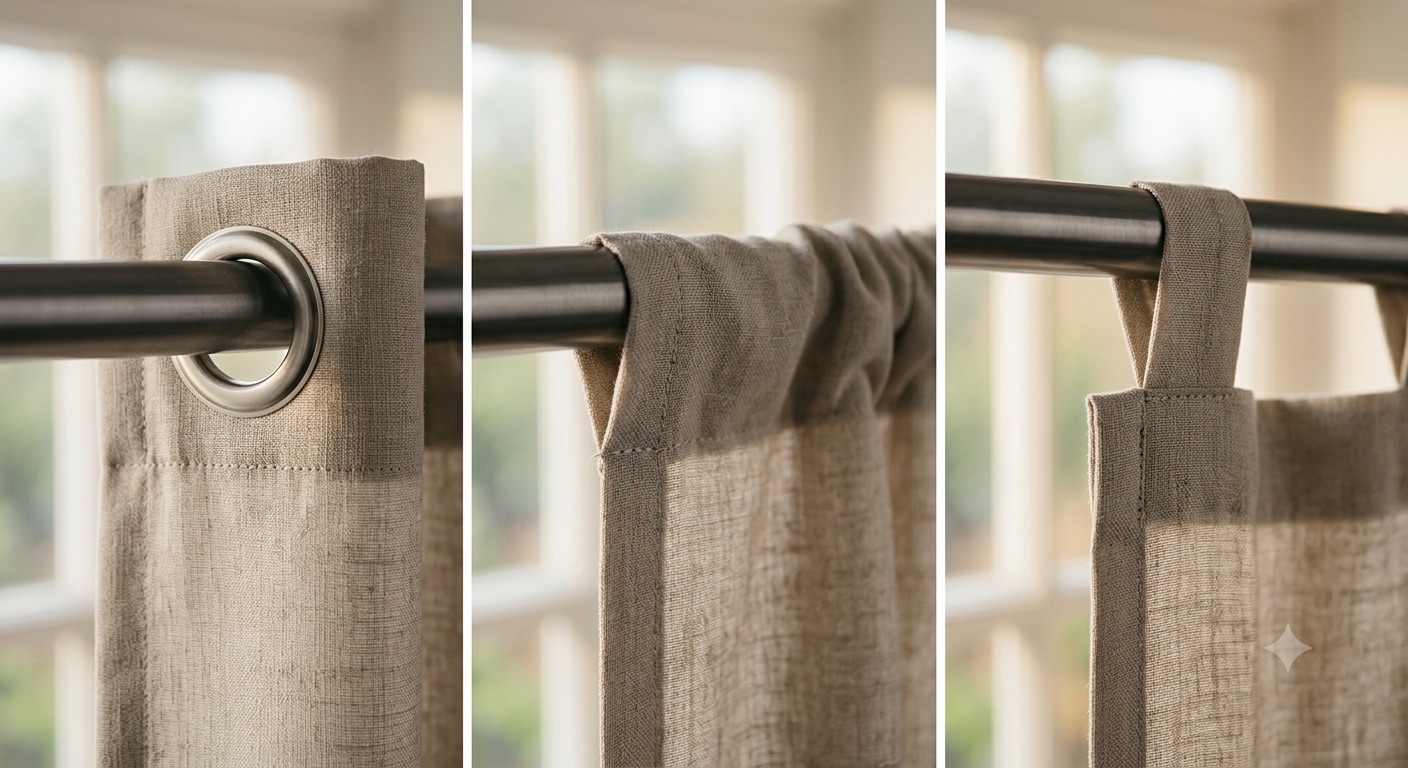
Grommet vs rod pocket vs back tab curtains
The three most common curtain header styles, how each hangs and slides, and which one fits your window and your rod.
The header is the top of the panel — the part that meets the rod. It decides how the curtain hangs, how it slides, and how it looks. These are the three you'll see most.
What is a grommet curtain?
Metal rings punched through the header; the rod threads through the rings. Grommets make deep, even, modern-looking folds and slide better than any other style — the metal ring glides where fabric drags. Best for curtains you open and close daily. One requirement: the rod has to fit through the grommet, so check the grommet's inner diameter against your rod.
What is a rod pocket curtain?
A sewn channel across the back of the header; the rod slips inside the fabric itself. It's the classic, casual look — the header gathers into soft ruching on the rod. The trade-off is friction: fabric on rod doesn't slide smoothly, so rod pocket suits panels that mostly stay put — frames, sheers, café windows — more than daily-drawn curtains.
What is a back tab curtain?
Fabric loops sewn behind the header, hidden from the front. The rod runs through the loops, and the panel hangs in tailored, pleat-like folds with no visible hardware — a more polished look than rod pocket without the metal of grommets. Sliding is middling: better than rod pocket, not as smooth as grommets. Many panels are dual-header (rod pocket and back tabs), so you can hang them either way.
Which header style should you choose?
Open and close them every day: grommet. Stationary panels or a soft, gathered look: rod pocket. Clean tailored folds with hidden hardware: back tab. Whatever you pick, the fullness math is the same — How many panels do I need? — and Find My Fit filters to panels we can actually cover your window with.