Can you use just one curtain panel?
Yes — single panels suit sidelights, café windows, narrow windows, and tied-back looks. Where one panel works and how wide it should be.
Curtains are sold in pairs so reliably that people assume windows require pairs. They don't. Plenty of windows are best served by exactly one panel — the hard part has always been finding somewhere to buy one.
Can you use just one curtain panel?
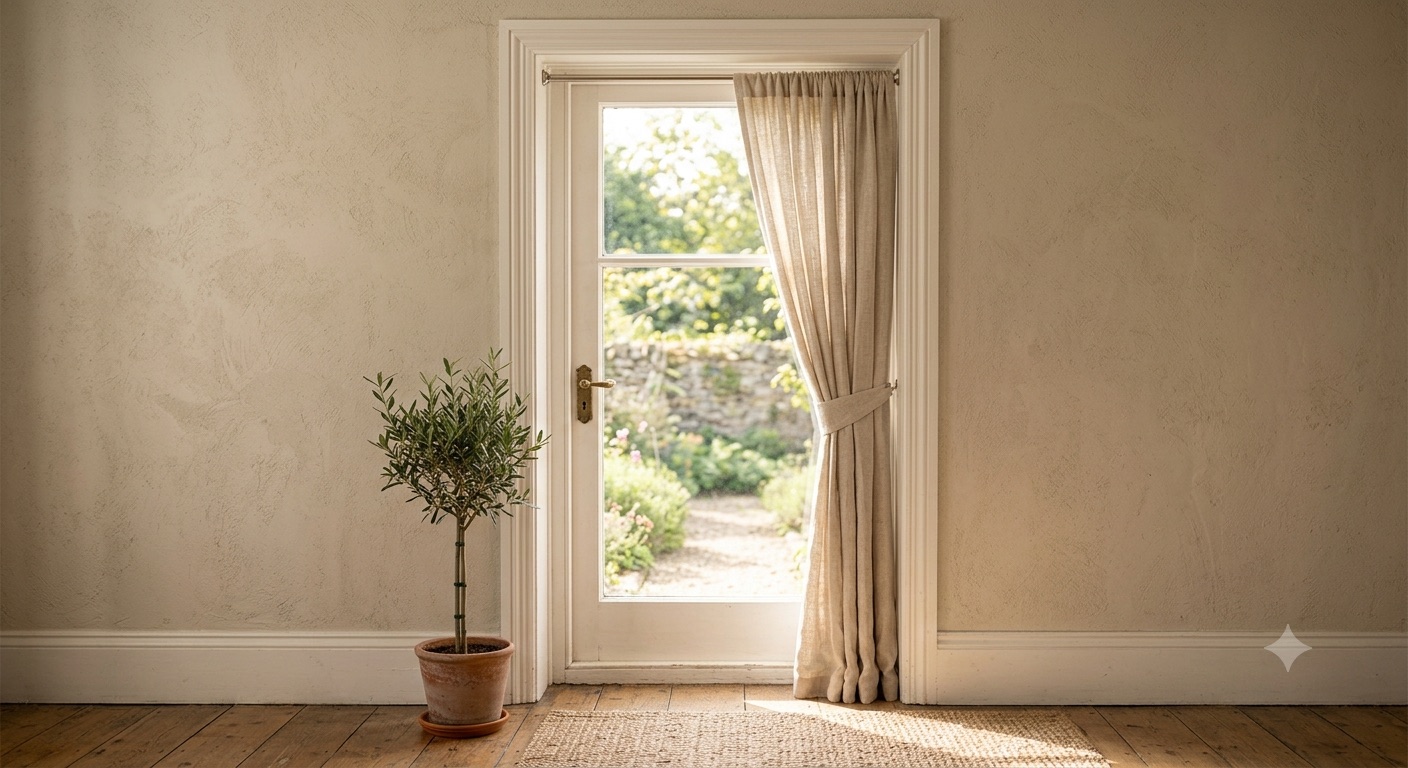
Yes. A pair is a convention, not a rule. One panel drawn to a single side reads as intentional and a little editorial — designers use single panels constantly. The only thing a pair gives you that a single can't is symmetric center-parting; if you don't need that, you don't need two.
Where does a single panel work best?
- Door sidelights — the narrow glass beside a front door; a pair physically doesn't fit
- Café and half windows — kitchens and baths where one short panel covers the glass
- Narrow windows — under ~30″ wide, a single panel at normal fullness covers the whole thing
- The tied-back look — one panel swept to the side with a holdback
- French and patio doors — one panel per door, drawn aside for traffic
- Closet and nook openings — one panel on a tension rod replaces a door
How wide should a single panel be?
Same fullness rule as any window: about 1.5–2× the width you want covered. A 50″ panel covers roughly a 25–33″ window with proper gather — which is exactly why narrow windows and sidelights suit singles so well. Decorative framing (a panel that never closes) can go narrower. The math lives in How many panels do I need?
Where can you buy a single curtain panel?
This is the real problem — big-box retail mostly won't sell you one. Selling by the single panel is our whole model: every listing shows exact quantity, so one panel means buying one panel, and a broken pair rescued from a returns pallet becomes your sidelight curtain instead of landfill. Start with Find My Fit or browse everything we have.