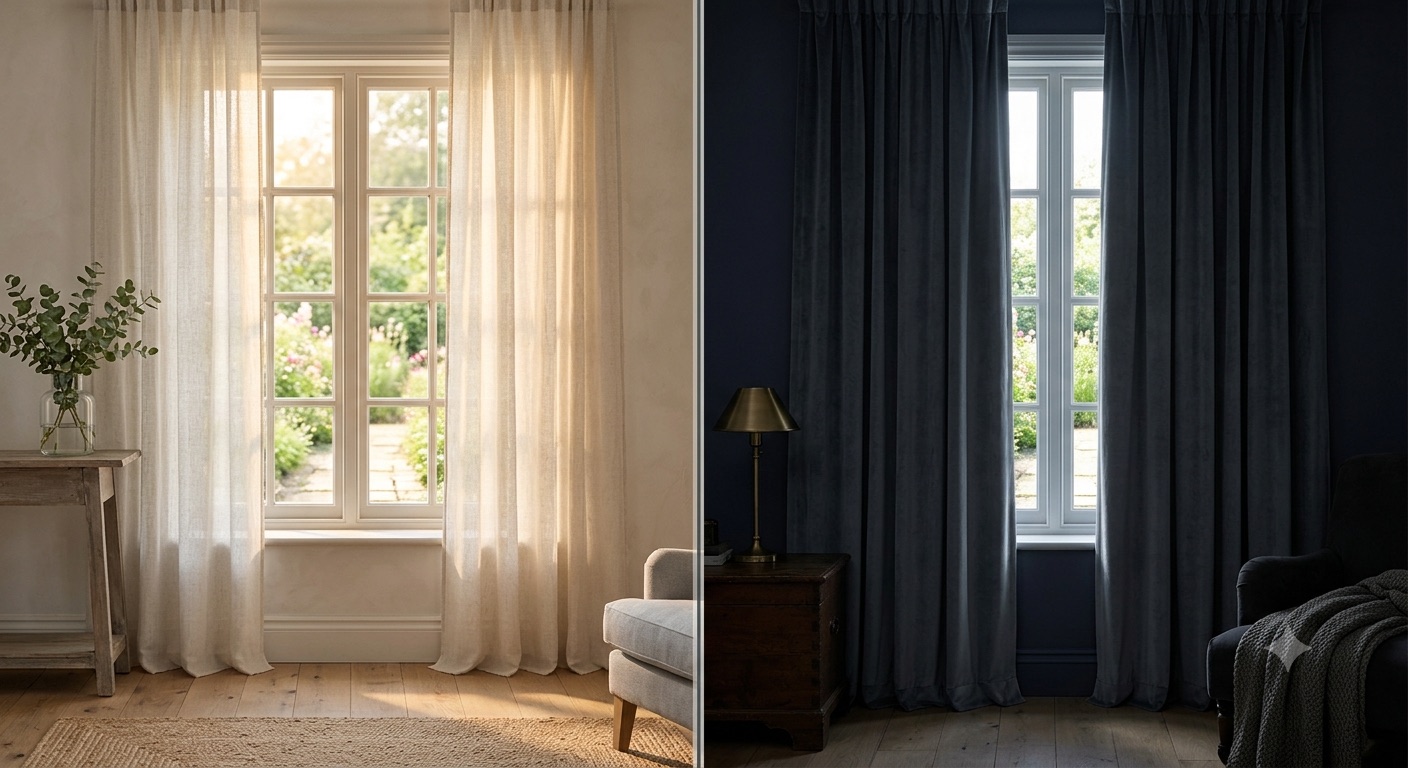
Blackout vs room darkening vs light filtering curtains
What each light-control level actually blocks, which rooms each suits, and how to tell them apart on a listing.
Light control is a spectrum, and the labels have real meanings — a "room darkening" panel bought when you needed blackout is one of the most common curtain returns. Here's the spectrum, honestly described.
What are blackout curtains?
Panels built to block essentially all light through the fabric — usually a woven-tight face fabric plus a dense backing or liner. In a room with blackout panels properly hung, midday looks like evening. Some light will still leak around the edges of any curtain; that's a hanging question (wider rod, closer mount), not a fabric failure. Bonus effect: the same dense construction insulates against heat and cold better than lighter fabrics.
What are room darkening curtains?
The middle of the spectrum: they cut most light but not all of it. A sunny window becomes a dim glow rather than darkness. Room darkening is enough for most sleepers, media rooms, and anyone who wants afternoon-nap dimness without full cave effect.
What are light filtering curtains?
Panels that soften and diffuse daylight instead of blocking it — the room stays bright, but glare and harshness go away, and you get daytime privacy (silhouettes, not detail). This is the category for living rooms, kitchens, and anywhere the point of the window is the light.
Which light control level should you pick?
Match it to the room's job. Night-shift sleeper or a nursery that naps at noon: blackout. Ordinary bedroom: room darkening usually does it — step up to blackout if streetlights or early sun bother you. Living spaces: light filtering, because you chose that room for the daylight. Every listing states its light control level, and the shop filter sorts the spectrum for you — or Find My Fit asks one light question and handles the rest.